What does Biomechanics mean in my Yoga Classes?
When I first started teaching yoga, I thought about alignment mainly in terms…
When I first started teaching yoga, I thought about alignment mainly in terms of where the body should be in a pose.
Where should the knee be?
How should the pelvis move?
Where should the shoulders be?
What is the “correct” shape of the pose?
Over time, my understanding of alignment has changed, although I still care of where and how body parts move or get placed.
Today, biomechanics is an important part of how I teach yoga. But for me, biomechanics is not about making every body fit into the same ideal shape. It is about understanding how a particular body moves, what supports that movement, and how we can create more stability, freedom and ease.
This is one of the reasons I feel such a strong connection with Anusara Yoga.
SO, WHAT DOES BIOMECHANICS ACTUALLY MEAN?
In simple terms, biomechanics is the study of how the body moves.
It looks at things such as bones, joints, muscles, connective tissue, forces, leverage and movement patterns. In yoga, this gives us another way of looking at asana.
Instead of simply asking: “Does this pose look right?”
I can ask: “What is happening in this person’s body?”
And perhaps even more importantly: “How can I help this person experience the pose in a way that makes sense for their body?”
That shift is significant.
Two people can be in the same yoga pose and have completely different experiences because their anatomy, proportions, mobility, strength, history and nervous systems are different.
So biomechanics helps me move away from the idea that there is one perfect shape for everyone.
ANUSARA: ALIGNMENT AS AN INTELLIGENT PROCESS
This understanding fits beautifully with Anusara Yoga.
Anusara works with the Universal Principles of Alignment (UPAs): Open to Grace, Muscle Energy, Inner Spiral, Outer Spiral and Organic Expansion. These principles are not simply instructions for creating a particular external shape. They are a way of exploring how different actions can create stability, balance and freedom in the body.
What I particularly appreciate is that alignment in Anusara is not separated from the person who is practicing.
Anusara describes alignment as an awareness of how different parts of ourselves are integrated and interconnected. Its methodology also emphasizes meeting students where they are and honoring their individuality.
This changes the way I teach, the way I practice yoga and the way I move in my daily life.
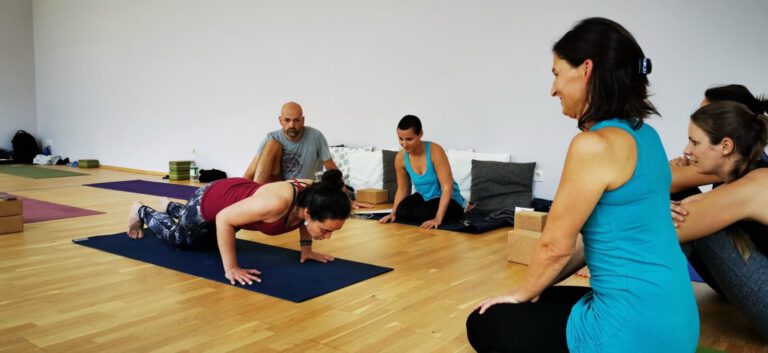
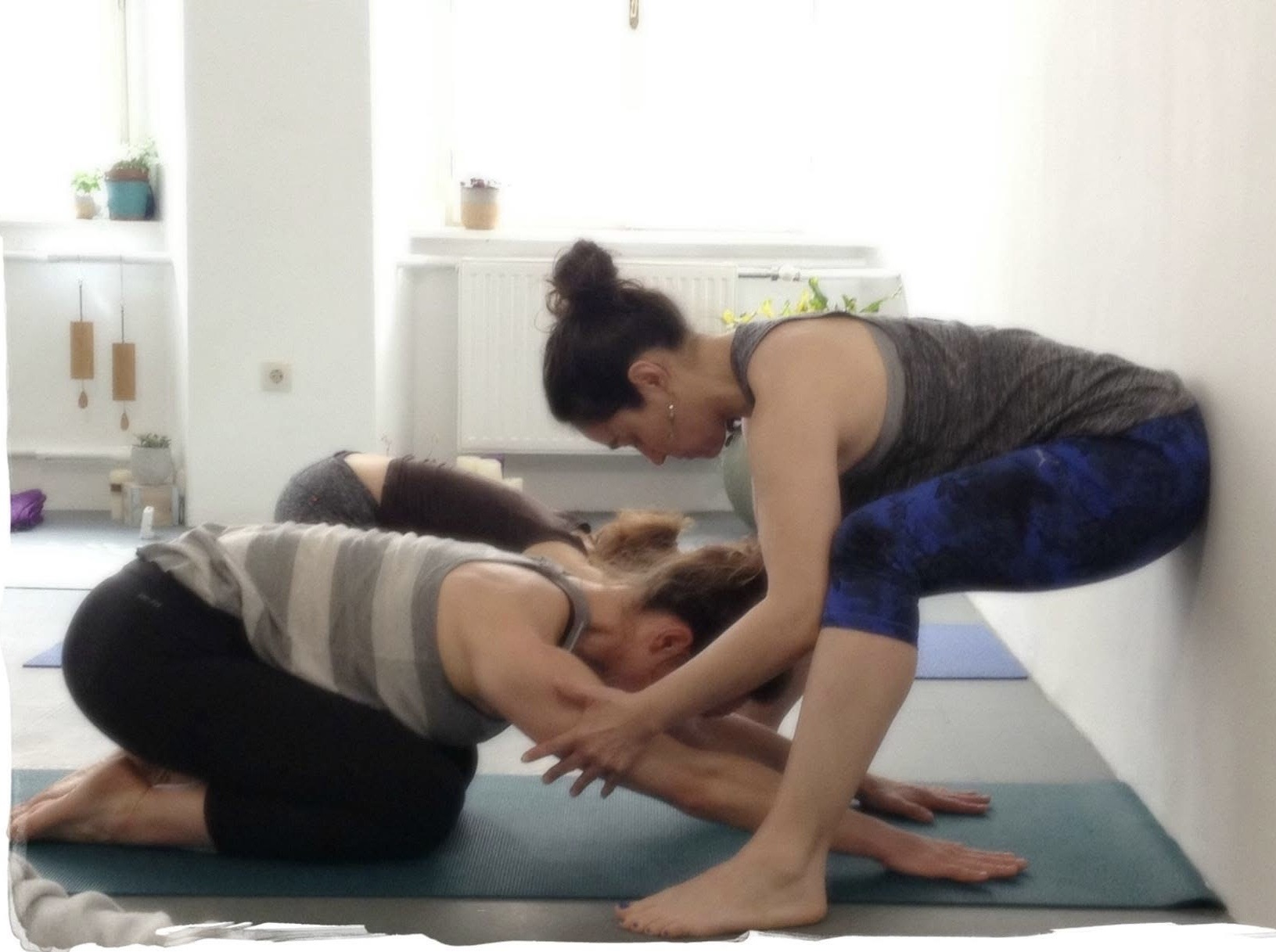
Rather than giving a student one fixed instruction and expecting their body to conform to it, I can offer an action, observe what happens, and then refine the practice.
Alignment becomes a conversation with the body.
FROM “CORRECT” TO FUNCTIONAL
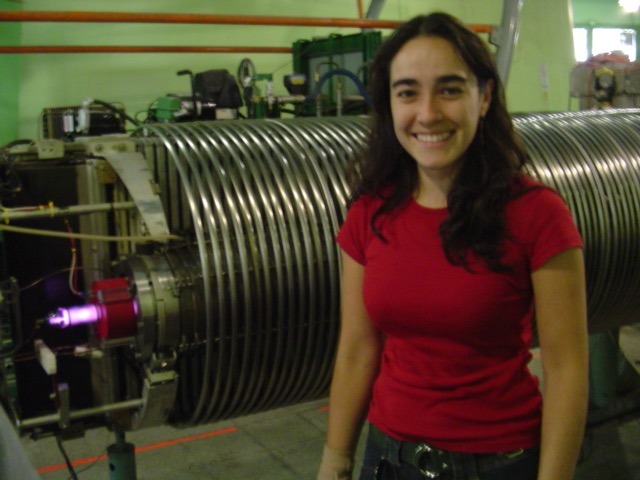
As some of you know, I have a background in physics and I can see how physics is everywhere, including in yoga. So in my teaching, biomechanics and functional movement play an important role, alongside the precise alignment associated with Anusara Yoga. My approach emphasizes a therapeutic and individualized understanding of the student, making sure that the practice of asana adapts to the needs of my student’s body and not the other way round.
For me, this brings an important question into the yoga room:
What is this pose actually asking this person’s body to do?
For example, if I teach Warrior II, I am not only interested in whether the front knee appears to be at a particular angle.
I am interested in how the foot connects to the ground. How the leg responds to the action of the foot. How the pelvis relates to the legs. How the spine organizes itself. How the shoulders and arms move in relation to the rib cage. And, perhaps most importantly, whether the student can breathe and experience the pose without unnecessary strain.
The external shape is only part of the story, the revealing of the process to get to the shape is where the understanding and awareness happens.
EVERY BODY IS DIFFERENT
One of the most valuable things biomechanics has taught me is to become curious about differences rather than trying to eliminate them.
We all have different bone shapes and proportions. We have different ranges of motion, different strengths and different restrictions.
One student’s “deep” hip opening may be another student’s natural range.
One person’s straight spine may look completely different from another person’s straight spine.
One student may need more muscular engagement to feel stable, while another may need to reduce effort and create more space.
This means that a pose does not necessarily need to look the same from one person to another to be meaningful.
The question becomes less:
“Can you get into the pose?”
and more:
“Can you explore this movement intelligently?”
STABILITY AND FREEDOM
This is one of the places where I see the beauty of the Anusara approach.
Anusara describes its alignment principles as supporting stability, strength and freedom, while its methodology brings together alignment, action and a heart-centered approach.
For me, biomechanics gives the physical intelligence behind that exploration. We need enough stability to feel supported. But stability does not have to mean rigidity. We also want movement, adaptability and space.
Yoga then becomes an exploration of the relationship between stability and mobility, effort and ease, grounding and expansion.
This is where the practice becomes much more interesting than simply trying to reproduce a shape.
ALIGNMENT IS NOT ABOUT FORCING THE BODY
There is another reason biomechanics matters to me as a teacher: it helps me question the idea that discomfort is automatically something we should push through. For me it means “alert, let’s check”
A sensation of effort can be a normal part of practice. But pain, compression, instability or a feeling that something is simply not working deserves attention. I see pain as the way our brain is telling us that something is not working, that something needs to change, and many times the engagement of a muscle, or the different placement of the body releases the pain or discomfort, showing us that we are approaching a better way.
Anusara’s therapeutic approach specifically emphasizes adapting alignment to individual anatomy and working intelligently with limitations, pain and injuries. That doesn’t mean that yoga can or should solve every physical problem. It means that as a teacher, I have a responsibility to become better at observing movement and offering choices. Props, variations, changes in range of motion, different actions or simply backing off can all be intelligent ways of practicing.
TEACHING THE PERSON, NOT JUST THE POSE
Ultimately, biomechanics has changed what I see when I look at a student.
I don’t just see a triangle pose. I see a person with a particular body, a particular history and a particular experience of movement. And that means my job is not simply to demonstrate the “right” version of the asana. My job is to create the conditions for the student to feel, understand and explore their own movement.
The Universal Principles of Alignment give me a language for this exploration. Biomechanics gives me a deeper understanding of what may be happening physically. And the heart-centered approach of Anusara reminds me that technique is not the whole practice, because the Non Dual Tantric philosophy behind it keeps reminding me that we are so much more than a physical body.
WHAT BIOMECHANICS MEANS TO ME
So, what does biomechanics mean in my yoga teaching? It means curiosity. It means learning to see movement rather than simply shape. It means understanding that alignment is not one-size-fits-all. It means respecting anatomy without reducing yoga to anatomy. It means giving students tools rather than telling them there is only one way to practice.
And it means remembering that the body is not a problem that needs to be fixed, rather a world full of possibilities to keep discovering, making the yoga mat a place to explore and understand ourselves. It is an intelligent, adaptable and constantly changing part of who we are.
For me, biomechanics doesn’t make yoga less beautiful or less spiritual, very much the opposite, cause it does show me how amazingly beautiful and capable we are. It gives me another way to listen.
And perhaps that is ultimately what good alignment teaching is about:
exploring and learning to listen to the body well enough that we can meet it where it is—and from there, discover where it can move with greater stability, freedom a smile in the face and ease.